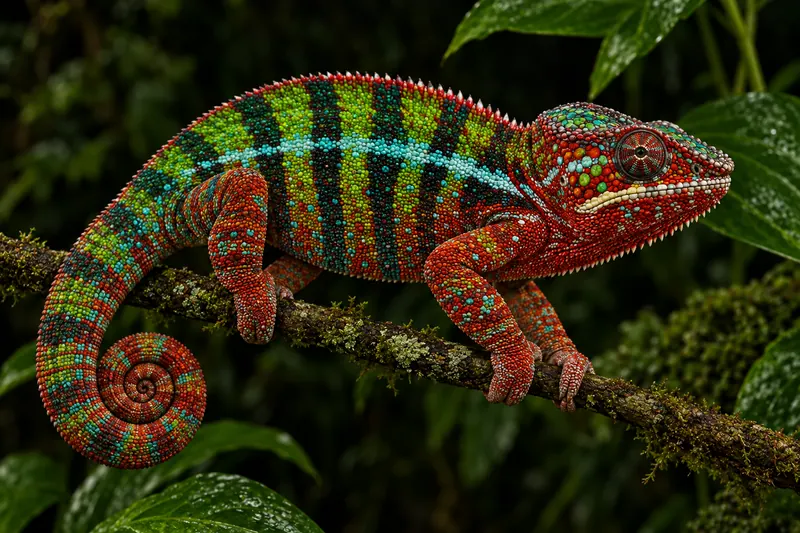
🦎 Panther Chameleon Care Guide
Panther chameleons are spectacular, color-changing tree dwellers from Madagascar. They are sensitive display animals that need tall screened enclosures, live plants, strong UVB and careful hydration.
🏠 Enclosure
At least 24 × 24 × 48 inches (tall) for one adult; larger is strongly recommended. House one chameleon per enclosure. Use dense live plants and branches at many heights, and plan for drainage — misting will soak a normal substrate.
🌡 Heat
Basking area 85–90°F • General temperature 72–77°F • Night 60–70°F. The top of the enclosure is warmest; turn the heat lamp off about 4 hours before the other lights.
💧 Humidity
Day 50–60%, night 75–100%. Mist morning and evening (ideally in the dark), and optionally use a dripper in the afternoon. Use distilled water in misters and foggers, and let surfaces dry daily.
☀️ UVB / Lighting
Required — a 22-inch T5 HO 5.0/6% tube on top of the mesh, with the basking branch so the chameleon’s back is about 6 inches below, giving about UVI 3. Add bright 6500K plant lighting. 12 hours of light per day.
🍽 Diet
Insectivore — a variety of gut-loaded insects (roaches, black soldier fly larvae, silkworms, hornworms, crickets and more). Juveniles: as much as they will eat daily. Adults: about 5 insects every other day. Dust lightly with calcium every feeding and a D3/multivitamin about twice a month.
📅 Daily / Routine Checks
- Check temperatures, humidity and lights
- Mist morning and evening (and run dripper if used)
- Feed and gut-load feeder insects
- Observe eyes, color, activity and drinking
🗓 Weekly / Regular Tasks
- Clean drainage and remove waste from plants and floor
- Check and refresh live plants
- Disinfect misting and fogging equipment as needed
- Record weight
✓ Good Fit For
A prepared, detail-oriented keeper who wants a stunning display animal and enjoys building planted, automated enclosures.
⚠ Think Twice If...
Think twice if you want a pet to handle often, are new to reptiles, or are not ready for specialized equipment and daily misting. Their lifespan is short compared with many reptiles, and females can produce eggs even without a male.
This is a general planning guide intended to help prospective keepers understand the commitment involved before getting an animal. Husbandry needs can vary with age, health, enclosure design, geographic location and individual animals.
Research current species-specific husbandry and establish care with an experienced reptile veterinarian when appropriate.
📚 Sources & Further Reading
Husbandry recommendations are reviewed against current reptile-care resources.
Think you've found the right reptile?
ReptiTrak can help organize feeding, growth, sheds, health, enclosure records and reminders from day one. Free for up to 3 animals.