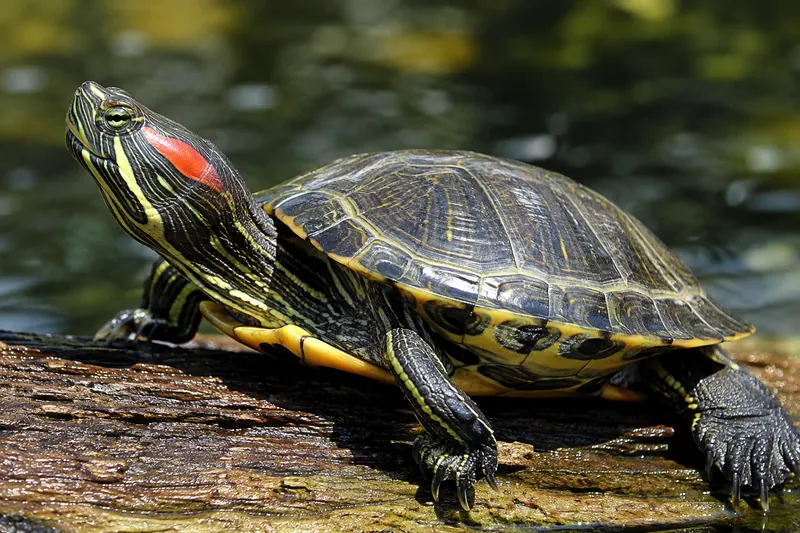
🐢 Red-Eared Slider Care Guide
Red-eared sliders are active, intelligent semi-aquatic turtles that can make fascinating long-term pets. However, the tiny turtle seen in a pet store eventually requires a very large aquatic setup, powerful filtration, a dedicated dry basking area, heat and UVB lighting.
🏠 Enclosure
Plan around the adult turtle rather than its size when purchased. A common guideline is approximately 10 gallons of swimming water per inch of shell length. Most adults therefore require roughly 100–120 gallons of aquatic space, with larger setups preferred, plus a completely dry and easily accessible basking area.
🌡 Heat
Basking surface around 104°F • Basking air about 85–90°F • Water temperature varies with age and should be monitored
💧 Humidity
Ambient humidity is less important than water quality, appropriate water temperature, basking conditions and providing a completely dry basking area.
☀️ UVB / Lighting
Required — provide appropriate linear UVB over the basking area alongside the heat source, without glass or plastic blocking the UVB.
🍽 Diet
Omnivore — quality aquatic turtle pellets plus appropriate leafy greens, aquatic vegetation and animal-based foods. Younger turtles generally consume proportionally more animal matter than adults.
📅 Daily / Routine Checks
- Check water and basking temperatures
- Check lighting, filtration and other equipment
- Observe behavior, appetite, eyes, skin and shell
- Feed according to age and feeding schedule and remove uneaten food as needed
🗓 Weekly / Regular Tasks
- Assess or test water quality
- Remove accumulated waste and debris
- Perform appropriate water changes and filtration maintenance
- Inspect shell, skin, eyes and overall body condition
✓ Good Fit For
Someone who enjoys aquatic setups, has room for a very large enclosure, is comfortable maintaining water quality and wants a long-lived, highly visible reptile.
⚠ Think Twice If...
Think twice if you want a small tank, inexpensive setup or low-maintenance pet. Adult sliders require substantial space, filtration, electricity, cleaning and a commitment that can last decades.
This is a general planning guide intended to help prospective keepers understand the commitment involved before getting an animal. Husbandry needs can vary with age, health, enclosure design, geographic location and individual animals.
Research current species-specific husbandry and establish care with an experienced reptile veterinarian when appropriate.
📚 Sources & Further Reading
Husbandry recommendations are reviewed against current reptile-care resources.
Think you've found the right reptile?
ReptiTrak can help organize feeding, growth, sheds, health, enclosure records and reminders from day one. Free for up to 3 animals.