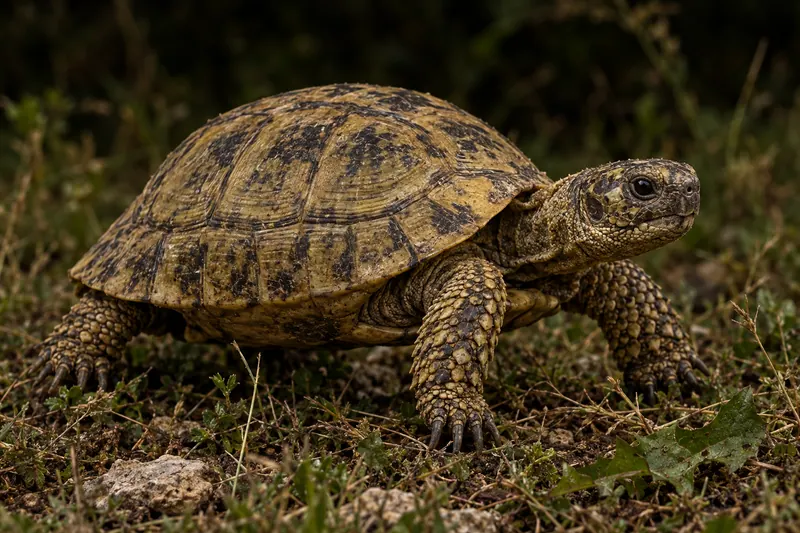
🐢 Russian Tortoise Care Guide
Russian tortoises are small, hardy, active tortoises from Central Asia. They love to dig and explore, do well outdoors in warm weather, and can live 50 years or more.
🏠 Enclosure
Adults need at least 7 × 3.5 × 2 feet (about 24.5 sq ft) indoors; young tortoises under 6 inches can use 4 × 2 × 2 feet temporarily. A secure outdoor pen in good weather is excellent. Add 10 sq ft per extra tortoise and avoid housing males together.
🌡 Heat
Basking area about 95°F • Cool zone 75–85°F • Night 70–75°F. Outdoors, provide a heated shelter if nights fall below 50°F, and bring tortoises inside for cold winters.
💧 Humidity
Juveniles about 40–75% (lower by day, higher at night). Provide a humid hide of moistened substrate on the cool end. Soak juveniles in shallow lukewarm water for 10–15 minutes twice a week.
☀️ UVB / Lighting
Required indoors — a T5 HO 10–12% tube about ⅓ of the enclosure length on the warm side, giving UVI 3–4 at the basking spot. 14 hours of light in summer, 10 in winter. Outdoor sunlight is ideal.
🍽 Diet
Herbivore — mostly leafy greens, grasses and edible weeds (high fiber, low protein, low sugar), served on a plate. Growing tortoises: as much as they eat daily. Adults: a portion about the size of the shell daily. Fruit and insects only as rare treats. Sprinkle with multivitamin and keep a cuttlebone available.
📅 Daily / Routine Checks
- Check temperatures and lights
- Provide fresh, shallow water
- Feed greens and remove leftovers
- Spot-clean waste
🗓 Weekly / Regular Tasks
- Soak juveniles twice a week
- Scrub and disinfect the water dish
- Check substrate moisture and humid hide
- Record weight
✓ Good Fit For
Someone wanting a small, sturdy tortoise with a simple plant-based diet and room for a large indoor table or an outdoor pen.
⚠ Think Twice If...
Think twice if you cannot commit for decades or provide a large enclosure — glass tanks are too small. They are strong diggers and climbers, so outdoor pens must be escape-proof.
This is a general planning guide intended to help prospective keepers understand the commitment involved before getting an animal. Husbandry needs can vary with age, health, enclosure design, geographic location and individual animals.
Research current species-specific husbandry and establish care with an experienced reptile veterinarian when appropriate.
📚 Sources & Further Reading
Husbandry recommendations are reviewed against current reptile-care resources.
Think you've found the right reptile?
ReptiTrak can help organize feeding, growth, sheds, health, enclosure records and reminders from day one. Free for up to 3 animals.