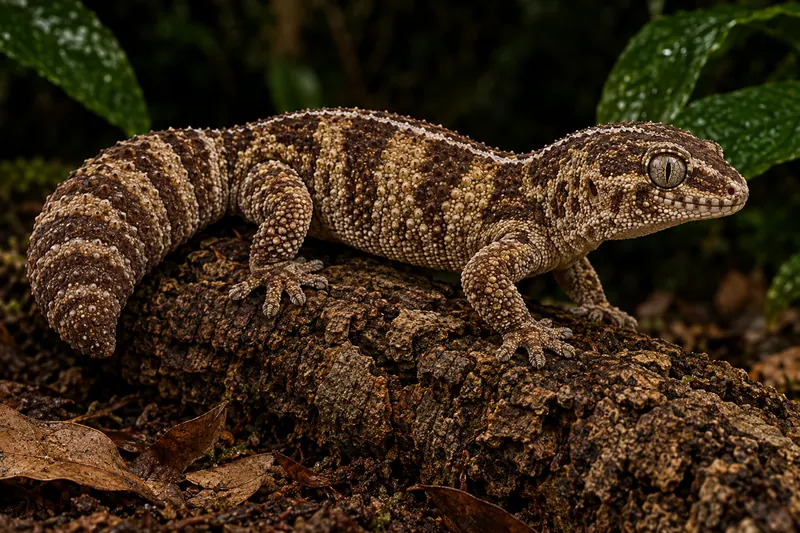
🦎 African Fat-Tailed Gecko Care Guide
African fat-tailed geckos are calm, nocturnal ground-dwelling geckos from West Africa, closely related to leopard geckos. They prefer more humidity than leopard geckos and are generally very docile once settled.
🏠 Enclosure
At least 36 × 18 × 18 inches for one gecko; larger is strongly recommended. Best housed alone — males especially will fight. Provide a warm hide, a cool hide and a humid hide, plus at least 4 inches of well-drained substrate.
🌡 Heat
Warm season (Apr–Oct): warm hide 90–94°F • Cool side 72–77°F • Night 72–77°F. Cool season (Nov–Mar): warm hide about 79°F • Cool side 68–74°F • Night 63–64°F. Keep juveniles under 6 months at warm-season temperatures.
💧 Humidity
Warm season: 70–80% by day and up to 100% at night. Cool season: about 50% by day and 70–75% at night. Provide a humid hide with moistened substrate (not sphagnum moss).
☀️ UVB / Lighting
Recommended — low-level UVB giving about UVI 1–2 in the basking area, overlapping the heat lamp on the warm side. 12 hours of light (13 in summer, 11 in winter). Without UVB, a high-D3 calcium is required.
🍽 Diet
Insectivore — about 2 insects per inch of the gecko’s length, or what it eats in 15 minutes. Juveniles daily; young adults every 2–3 days; adults with tails fatter than their neck about every 5 days. Dust all insects with calcium.
📅 Daily / Routine Checks
- Check temperatures, humidity and equipment
- Provide fresh water in a shallow bowl
- Spot-clean waste
- Feed juveniles and remove uneaten insects
🗓 Weekly / Regular Tasks
- Feed adults on schedule
- Scrub and disinfect the water bowl
- Re-moisten the humid hide
- Check tail thickness and body weight
✓ Good Fit For
Someone who likes the idea of a leopard gecko but wants a quieter, slower gecko and can manage seasonal humidity changes.
⚠ Think Twice If...
Think twice if you cannot keep humidity up, or want a reptile active during the day. Never grab them by the tail — it can drop off.
This is a general planning guide intended to help prospective keepers understand the commitment involved before getting an animal. Husbandry needs can vary with age, health, enclosure design, geographic location and individual animals.
Research current species-specific husbandry and establish care with an experienced reptile veterinarian when appropriate.
📚 Sources & Further Reading
Husbandry recommendations are reviewed against current reptile-care resources.
Think you've found the right reptile?
ReptiTrak can help organize feeding, growth, sheds, health, enclosure records and reminders from day one. Free for up to 3 animals.