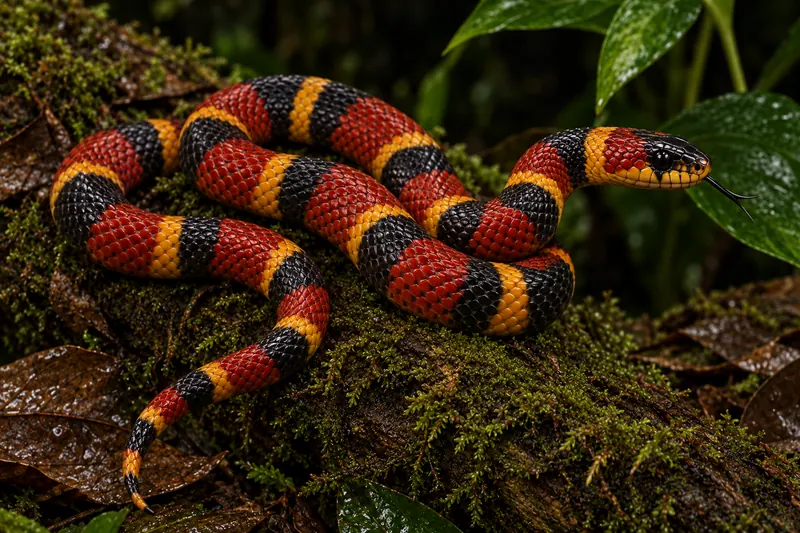
🐍 Milk Snake Care Guide
Milk snakes are colorful, hardy snakes famous for their red, black and yellow bands. There are many subspecies, from small to fairly large, and most adapt well to captivity and handling.
🏠 Enclosure
At least 48 × 24 × 24 inches for an average adult (no less than 18 inches tall); larger subspecies need more. House alone — milk snakes eat other snakes. Provide warm and cool hides, a humid hide, clutter and a soaking-size water bowl.
🌡 Heat
Basking surface 85–90°F • Cool side 75–80°F • Night 70–75°F. Turn heat off at night unless temperatures fall too low, and use a thermostat.
💧 Humidity
Average 40–60%, higher at night and on the cool side. A humid hide with moistened sphagnum moss is required; mist as needed.
☀️ UVB / Lighting
Recommended — a T5 HO 5.0/6% tube across about half the enclosure on the warm side, giving UVI 2–3 at the basking spot. About 15 hours of light in summer and 9 in winter, changing gradually.
🍽 Diet
Carnivore — frozen-thawed whole prey no wider than 1.5× the snake’s widest point. Juveniles every 7–10 days; adults every 10–14 days. Lightly dust prey with calcium/multivitamin occasionally.
📅 Daily / Routine Checks
- Check temperatures and equipment
- Provide fresh, clean water
- Spot-clean feces and urates
- Observe activity and general condition
🗓 Weekly / Regular Tasks
- Offer prey on the feeding schedule
- Scrub and disinfect the water bowl
- Refresh humid-hide moss
- Record weight and review body condition
✓ Good Fit For
A first-time or experienced keeper who wants a brightly colored, active snake with simple care.
⚠ Think Twice If...
Think twice if you plan to house snakes together. Hatchlings can be nervous and quick, and adult size varies a lot by subspecies, so confirm which one you are getting.
This is a general planning guide intended to help prospective keepers understand the commitment involved before getting an animal. Husbandry needs can vary with age, health, enclosure design, geographic location and individual animals.
Research current species-specific husbandry and establish care with an experienced reptile veterinarian when appropriate.
📚 Sources & Further Reading
Husbandry recommendations are reviewed against current reptile-care resources.
Think you've found the right reptile?
ReptiTrak can help organize feeding, growth, sheds, health, enclosure records and reminders from day one. Free for up to 3 animals.